
How We Work
What It’s Like Hiring And Working With Us
Most people who hire video production don't do it often, so it's normal to feel unsure about what to ask, what to expect, or what something should cost. Helping clients figure that out is part of the job, and we enjoy it. Here's what working with Creative Images looks like, from the first email to the final video.
We'll talk through what you need. We'll send examples and rough pricing. We'll handle the shoot and bring everything we need. You'll see a polished first cut, and we'll work through revisions until you're happy. Most projects take one to four weeks.
IN SHORT
01
The First Conversation
When you contact us, we'll usually start with a short email exchange or a phone call. The goal isn't to gather a perfect brief — most clients don't have one when they first reach out, and that's fine. We just want to understand what you're trying to accomplish and what kind of video you're imagining.
We'll ask about the purpose of the video, who you're trying to reach, where it will be used, and what you're hoping it will accomplish. Sometimes this conversation surfaces ideas you hadn't considered, or a different style or approach that might work better than what you originally had in mind. Either way, we'll get there together.
Figuring Out What You Need
Once we understand what the video is for, we help you think through what it should be. We’ll talk about:
The style — fast and energetic, story-driven, conversational, polished, casual, or something in between
Who needs to be interviewed or featured, if anyone
What kind of supporting footage will help tell the story
How the video will be used — website, social, presentations, fundraising events, internal training
Whether one video is right, or whether the same shoot can produce several pieces (a longer feature plus shorter cuts for social media is often only slightly more work than the longer piece alone)
If a script or voiceover is needed, we can write it, help you write it, or work from your version. If you have brand guidelines, existing graphics, or a designer you work with, we can work closely with them.
02
Scope and Pricing
Pricing can be the part that feels most uncertain, so we try to make it easy. After we've talked through what you're looking for, we'll often send you links to similar projects we've produced, along with what those projects cost. Seeing real examples at real price points usually makes things much clearer than abstract estimates.
03
Single-day shoots and shorter projects
Can be as little as $2000 to $3000 on up, depending on scope and editing complexity.
Multi-day projects
Fundraising films, event coverage, story-driven pieces with extensive interviews and b-roll usually run from $5000 to $10,000. These are typically our most complex projects requiring a great deal of time to capture footage, and in editing later.
Filming-only work
We often film and simply provide the raw video files. The cost is $1200 for a full-day, or $800 for half-day. This rate includes all gear such as cameras, lighting and audio.
Graphics-heavy projects or complex post-production can change pricing. We'll always discuss this clearly before any work starts, so there are no surprises later.
We also work to find an approach that fits your budget. A smaller project can still look professional and polished — it just needs to be planned thoughtfully.
The Shoot
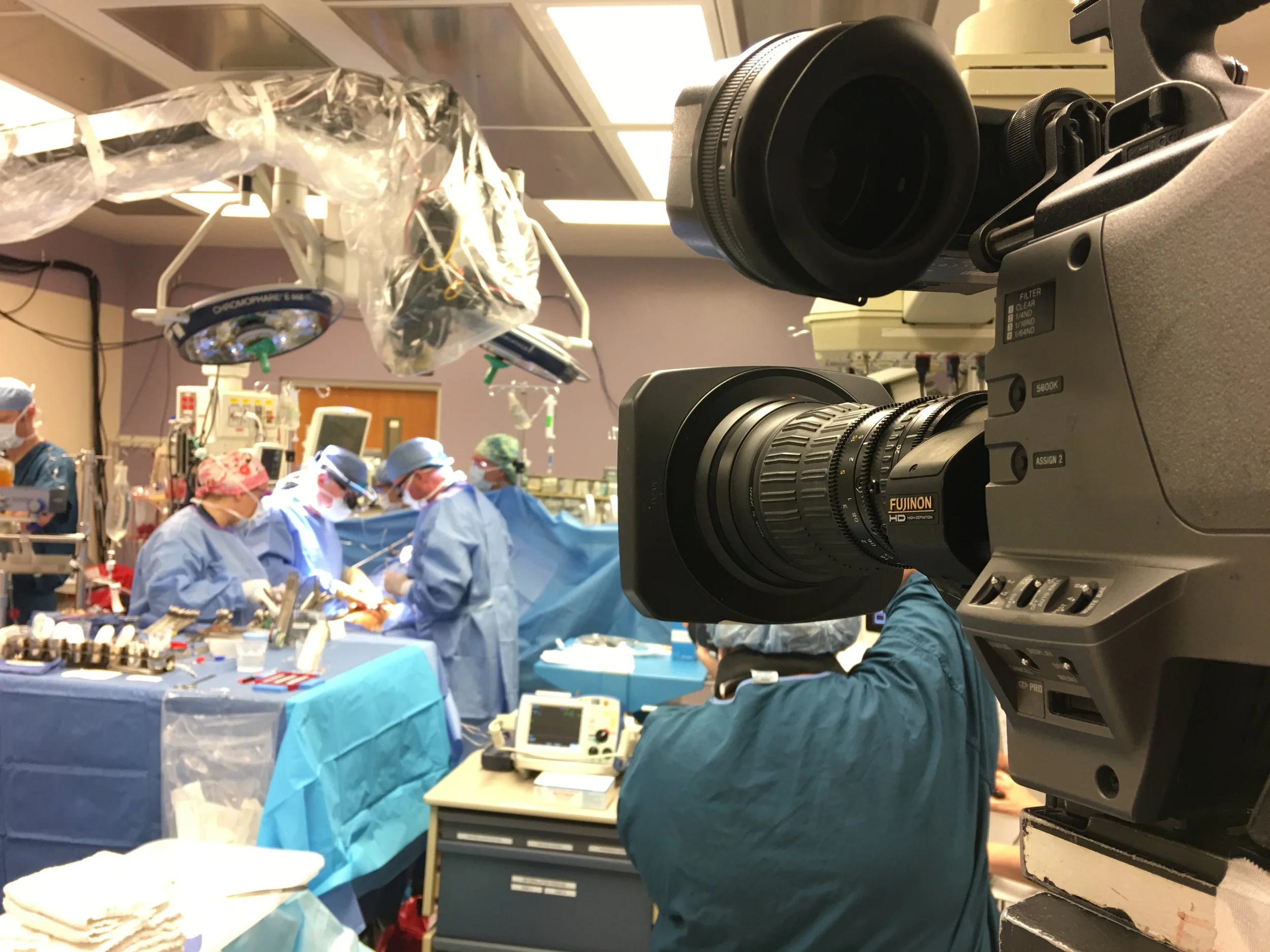
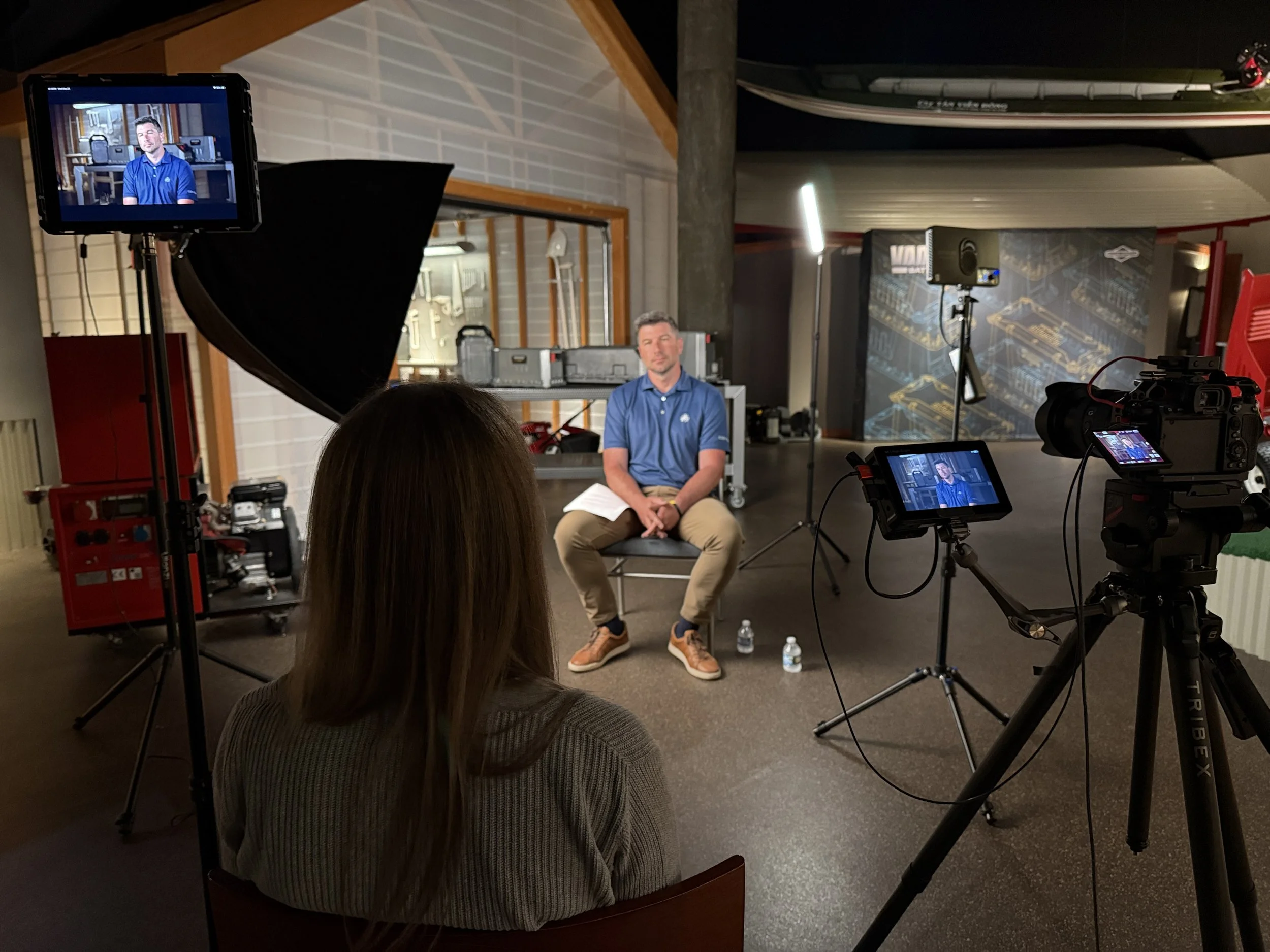
Once we've agreed on scope, we plan the shoot. For interviews, you'll typically identify who needs to be interviewed and we'll handle the rest — lighting, audio, camera, framing, and direction. For b-roll, we'll talk through what kinds of supporting shots will tell the story best.
We bring everything we need: cameras, lights, professional audio, a teleprompter for prepared remarks, drone for aerial shots, and a wide enough kit to handle most situations without issues. If something unexpected comes up on the day, we'll take care of it.
We're also flexible on style. Some clients want polished, traditional production. Others want something that feels more like what they see on YouTube — natural lighting, handheld camera, a microphone visibly in frame. We can shoot either way, and we'll talk through what fits your audience and message before we set up.
04
Unplanned Video
Recognizing the right moment when it shows up.
On a recent shoot for a camp serving people with special needs, we were preparing to interview several staff members for a fundraising video. Before we started rolling, one of the team members began giving our crew an informal tour of the grounds. About three minutes in, we stopped her. Her personality, her stories, the way she talked about the camp — all of it was extraordinary. We mic'd her up on the spot, pulled out a smaller camera, and filmed the rest of the tour as she walked it.
The client got their planned fundraising video. They also got a second piece, built from the unplanned tour, that became one of the most engaging things we'd shot all year.
This kind of thing is part of why we keep the team small and senior. Recognizing the right moment when it shows up, and being able to act on it without a production meeting, only happens when the people on set have done this for a long time.
ON-LOCATION INSTINCT
The Edit
Once the shoot wraps, we come back to the edit. For most clients, the first version we send is closer to a finished video than a rough cut — color-corrected, with b-roll cut in, music in place, and graphics at least roughed in. We've found that showing first-time clients an early rough cut can be confusing or worrying ("is this what the final is going to look like?"). A polished first cut shows you what we're actually going for.
You watch it, sit with it, and send us your notes. We make the changes. Most projects go through two or three rounds of revisions, and we keep working until you're happy with what you have. The exception is a major scope change — a fundamentally different direction or new shoot day — which we'd discuss before starting.
For agency clients or experienced buyers, the process is often different — sometimes you want raw footage and your own post-production team, sometimes you provide graphics, voiceover, and music for us to assemble. We can be as hands-on or hands-off as the project requires.
05
Delivery, and What Happens After
We deliver finished videos via download link in the formats you need — broadcast specs, web, social, vertical for mobile, multiple aspect ratios if needed. From there, the video is yours to use however you want.
A few things worth knowing about what happens after delivery:
A video is never really "done." If you want to update it months or years later — change a graphic, swap in new footage, refresh for a new campaign — we keep your project files and can usually make adjustments quickly.
One shoot can produce more than one video. A 5-minute feature, a 90-second version for social, a 30-second teaser, vertical cuts for Instagram or TikTok — these are usually only slightly more work than producing the long piece alone.
Your happiness is the goal. We've never had a client who wasn't happy with their final video. If something isn't working, we keep at it until it is.
06
The work, quietly doing its job.
Our videos have helped clients raise hundreds of millions of dollars over the years, including one capital campaign that reached its $120 million goal. More recently, two schools we've produced enrollment videos for reported enrollment increases that met their goals.
Most of our nonprofit and fundraising work doesn't generate headlines, but it works — quietly, year after year, helping organizations explain who they are, what they do, and why it matters.
OUTCOMES
A Note on Style and Flexibility
We've been doing this for more than 30 years, but we don't shoot like it's 2014. Visual storytelling has changed, attention spans have changed, and what works today on a corporate website is different from what worked even five years ago.
Some recent things clients have asked for:
Natural-light interviews instead of full studio lighting, for a more real feel
On-camera talent holding a wireless microphone visibly, rather than wearing a hidden lav, for a YouTube-influenced look
Shorter videos — 60 to 90 seconds — for social and digital, where shorter usually outperforms longer
Vertical shooting for mobile audiences
We're flexible. The goal is always to make the video work for your audience, not to make it look the way we've always made videos.
Common Questions
How long does a project take?
For a single-day shoot where we have all materials from you, typically about a week from shoot to delivery. Multi-day fundraising and storytelling projects usually take around four weeks, which gives time for thoughtful revisions. Filming-only work is often delivered the next day, sometimes same-day on site. Timelines depend on scope and how quickly you can review revisions.
Do you write scripts?
Yes. We can write a full script, help you refine yours, or work from copy you provide. For voiceover-driven pieces, we usually want the script written before the shoot so the b-roll matches.
How many revision rounds do we get?
We don't put a hard limit on revisions. Most projects settle in two or three rounds. We'll keep working until you're happy with the final video. The exception is a major scope change, which we'd discuss separately.
Can we provide our own graphics, music, or voiceover?
Absolutely, and many clients do. If you have a designer, brand guidelines, or audio assets you'd like us to use, send them over. We'll work them into the final piece.
What if we don't know exactly what we want?
That's normal, and most of our clients start there. We'll help you figure it out through conversation. You don't need to come in with a complete plan.
Can one shoot produce multiple videos?
Yes — and we recommend it for most clients. A long feature, social shorts, vertical cuts, and teasers can usually all come from the same shoot day, at much lower marginal cost than producing each one separately.
Do you travel?
We're based in Sheboygan County, Wisconsin, and our primary service area covers Milwaukee, Madison, Green Bay, Appleton, Fond du Lac, and the surrounding region. We've worked nationally and internationally over the years, but most projects today are within a couple hours of home.
Tell us what you're trying to communicate and who you're trying to reach. We'll help you figure out the rest.